Cloud environments move fast.
New workloads are deployed. Permissions change. Storage gets exposed. Integrations expand.
The problem is security visibility rarely keeps pace.
Cloud exposure management has become a critical challenge because risk is no longer static. Your attack surface changes daily, sometimes hourly.
And attackers know it.

The Cloud Attack Surface Keeps Expanding
Modern environments are constantly evolving.
Security teams now have to account for:
- Publicly exposed assets
- Over-permissioned identities
- Misconfigured storage
- Forgotten workloads
- Shadow cloud deployments
- CI/CD pipeline exposure
- Third-party integrations
Cloud growth creates opportunity.
It also creates blind spots.
Without strong cloud exposure management, risk accumulates quietly.
Visibility Is Falling Behind
Traditional security programs were built around environments that changed more slowly.
Cloud doesn’t behave that way.
A new deployment can introduce exposure in minutes.
Permissions can drift.
Unused services remain active.
Infrastructure can be publicly accessible without anyone realising.
That’s why cloud exposure management is becoming essential for security teams trying to reduce modern attack surface risk.
Why This Matters to Security Leaders
Attackers don’t care whether exposure was accidental.
They care whether it’s exploitable.
A single issue can become the starting point for:
- Initial access
- Credential theft
- Privilege escalation
- Lateral movement
- Data exposure
This mirrors the same patterns seen in identity attack paths, where hidden connections create unexpected breach opportunities.
Common Cloud Exposure Risks Teams Miss
1. Over-Permissioned Cloud Identities
Excessive IAM privileges create unnecessary attack opportunities. Access granted for convenience often remains far longer than intended.
2. Publicly Exposed Storage
Misconfigured storage remains one of the most common cloud exposure issues. Small mistakes can create significant risk.
3. CI/CD Pipeline Exposure
Build systems often contain secrets, privileged access, and deployment permissions, making them attractive attack targets.
4. Unmanaged Cloud Assets
Temporary environments frequently become permanent exposure points. Security teams may not even know they exist.
5. Misconfigured Security Controls
Cloud-native controls are powerful, but configuration mistakes are common. This is where cloud exposure often expands unnoticed.
The Real Challenge Is Speed
Cloud risk doesn’t wait for quarterly reviews.
By the time manual assessments happen:
- the environment has changed
- new risks have appeared
- old assumptions are already outdated
This is why static security approaches struggle.
Continuous cloud exposure management is becoming a requirement, not a nice-to-have.
What Good Cloud Exposure Management Looks Like
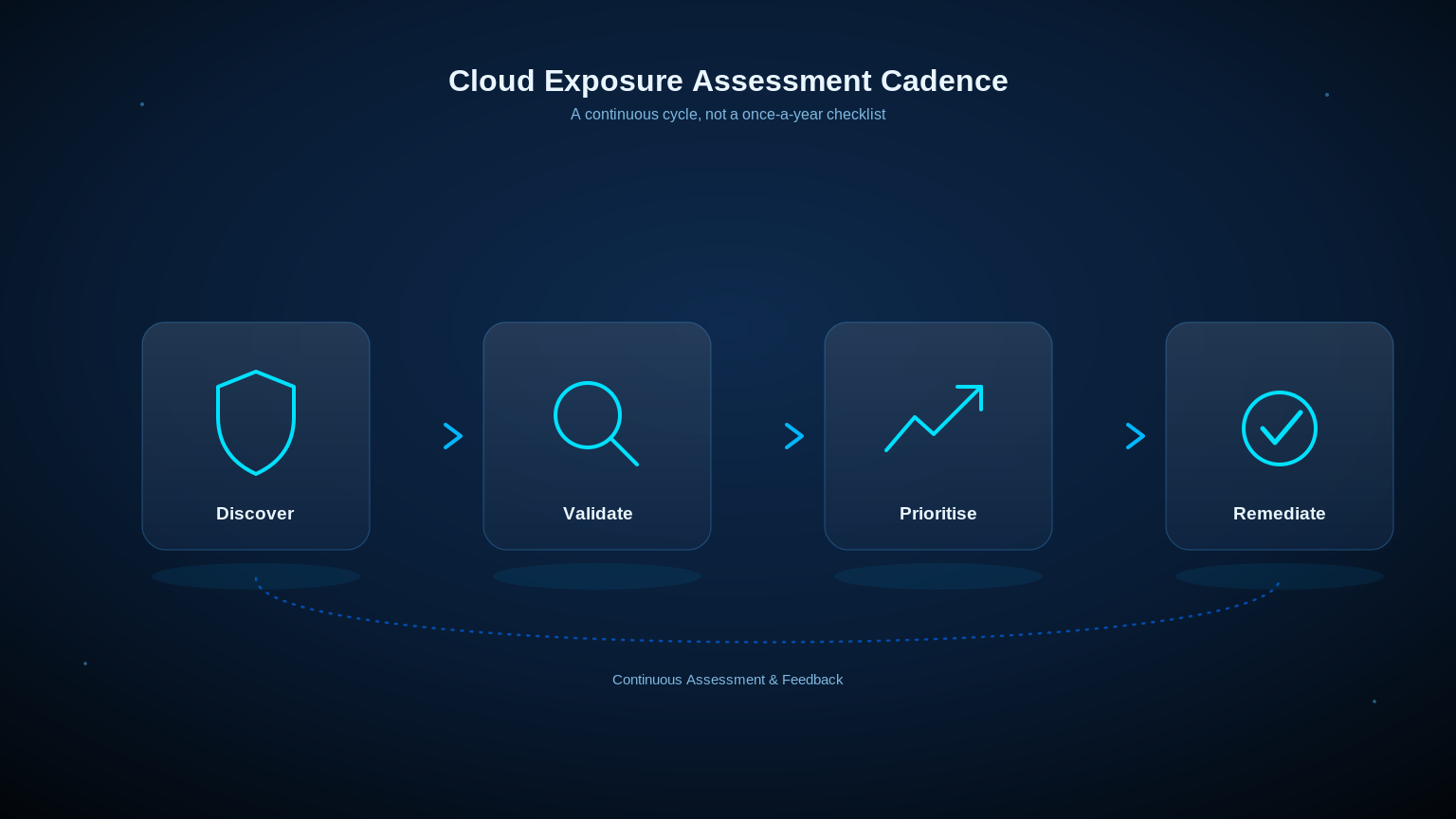
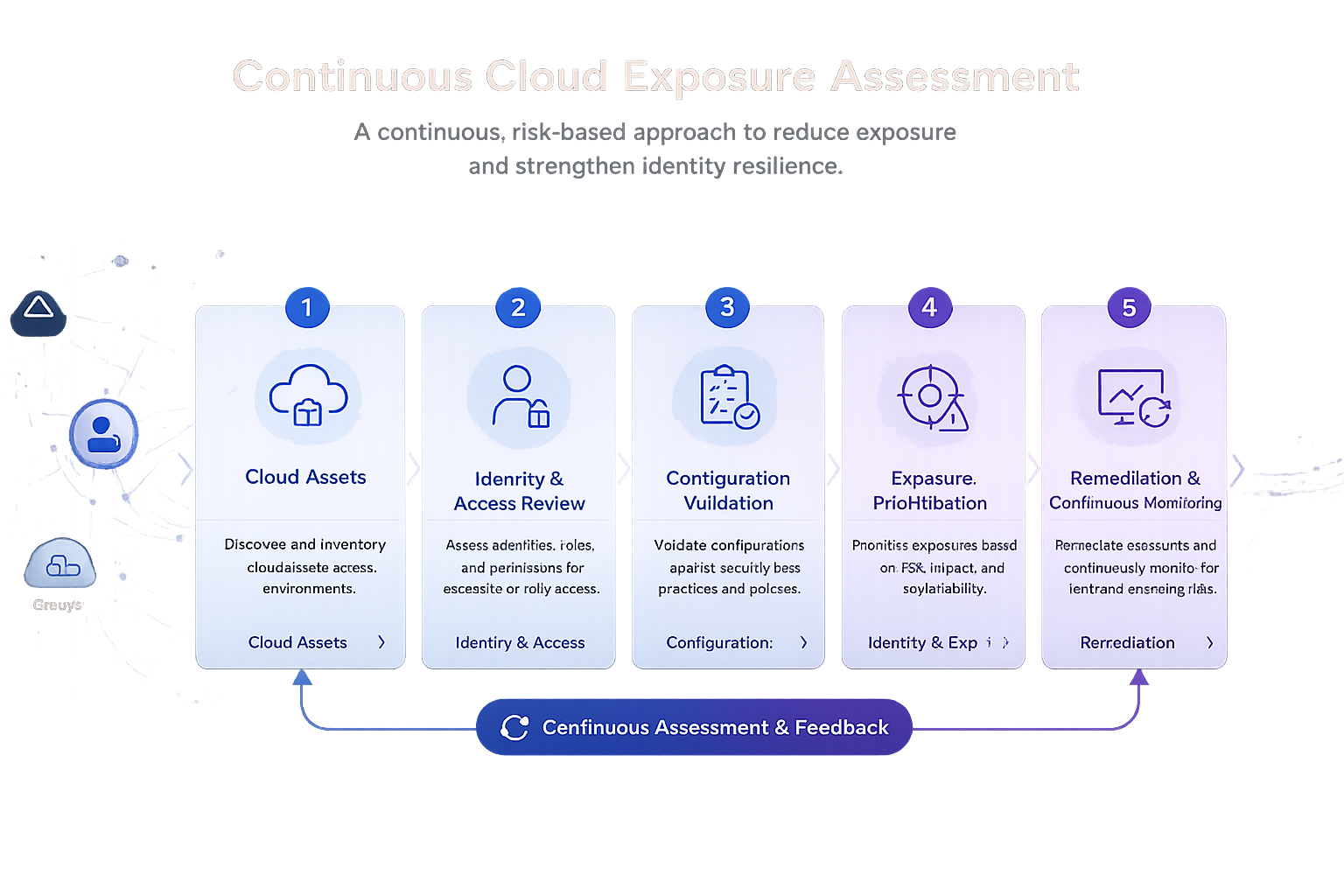
Effective programs focus on:
- continuous visibility
- risk-based prioritisation
- exploitable exposure identification
- remediation support
- validation over time
The goal is not more alerts.
The goal is understanding what attackers could actually exploit.
Exposure Without Visibility Is Just Risk You Haven’t Found Yet
The challenge isn’t lack of cloud tooling.
It’s knowing what actually matters.
A structured assessment helps prioritise exploitable exposure before attackers do.