Cloud misconfiguration risk has become one of the most common causes of cloud security incidents.
The challenge isn’t that security teams don’t understand cloud security.
The challenge is speed.
Development teams are under pressure to deploy faster. Infrastructure changes constantly. New services, permissions, integrations, and workloads appear every day.
In this environment, even small mistakes can create significant exposure.
What begins as a simple configuration error can quickly become a pathway to data exposure, privilege escalation, or unauthorised access.

Why Cloud Misconfiguration Risk Continues to Grow
Modern cloud environments are highly dynamic.
Teams regularly:
- Deploy new workloads
- Create new cloud resources
- Grant temporary access
- Integrate third-party services
- Update infrastructure configurations
Every change introduces the potential for human error.
Unlike traditional infrastructure, cloud environments can change hundreds of times per day.
This creates a growing cloud misconfiguration risk that many organisations struggle to manage.
The Gap Between DevOps and Security
DevOps and security teams often share the same objective: enabling the business.
However, they operate at different speeds.
Development teams focus on:
- Faster releases
- Operational efficiency
- Business agility
Security teams focus on:
- Risk reduction
- Governance
- Visibility
- Compliance
Neither approach is wrong.
The problem occurs when security visibility cannot keep pace with cloud change.
As environments grow, exposure can emerge long before security teams become aware of it.
Common Misconfigurations That Create Exposure
1. Excessive Permissions
Access is frequently granted to accelerate projects.
Unfortunately, permissions often remain long after they are needed.
Over time, these privileges create unnecessary attack opportunities.
2. Publicly Accessible Resources
Storage services, databases, and cloud applications are sometimes exposed to the internet unintentionally.
A single configuration mistake can expose sensitive data.
3. Misconfigured Security Groups
Firewall rules and network controls can become overly permissive.
What appears to be a temporary exception can become a permanent exposure point.
4. Unsecured Service Accounts
Service accounts frequently receive elevated privileges to support automation.
If not monitored properly, they can become attractive targets for attackers.
5. Forgotten Cloud Assets
Temporary environments, test workloads, and abandoned resources often remain active long after projects end.
Many organisations discover these assets only during security reviews.
Why Attackers Love Misconfigurations
Attackers don’t always need sophisticated exploits.
Many simply look for exposed opportunities.
Misconfigurations provide exactly that.
An attacker who discovers an exposed service, excessive permission, or unsecured cloud resource may gain access without triggering traditional security controls.
This is similar to how identity attack paths develop inside identity environments, where seemingly minor weaknesses combine to create larger security risks.
Visibility Is the Real Challenge
Many organisations have cloud security tools.
What they lack is context.
Thousands of alerts may be generated every month.
The critical question is:
Which exposures are actually exploitable?
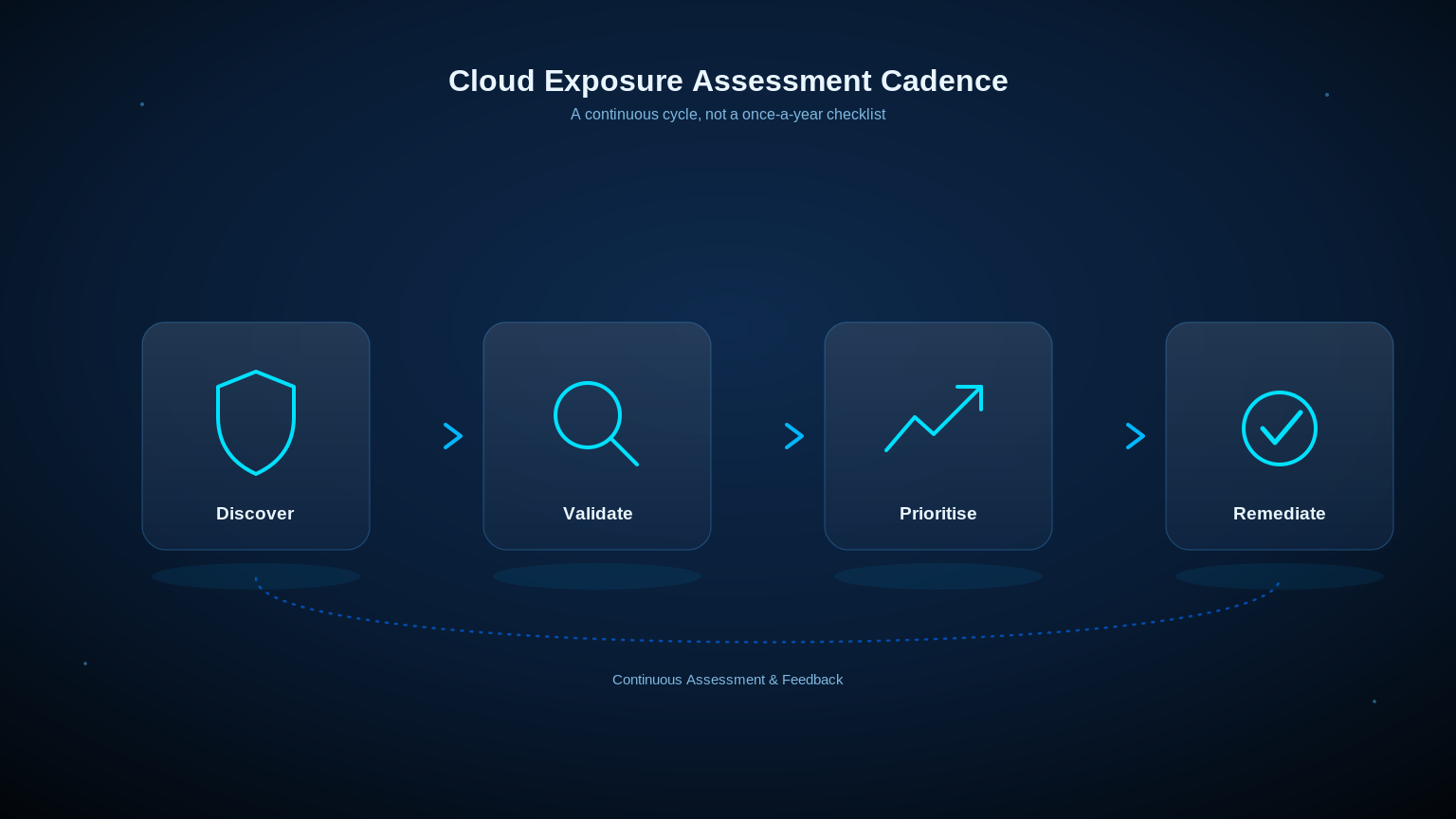
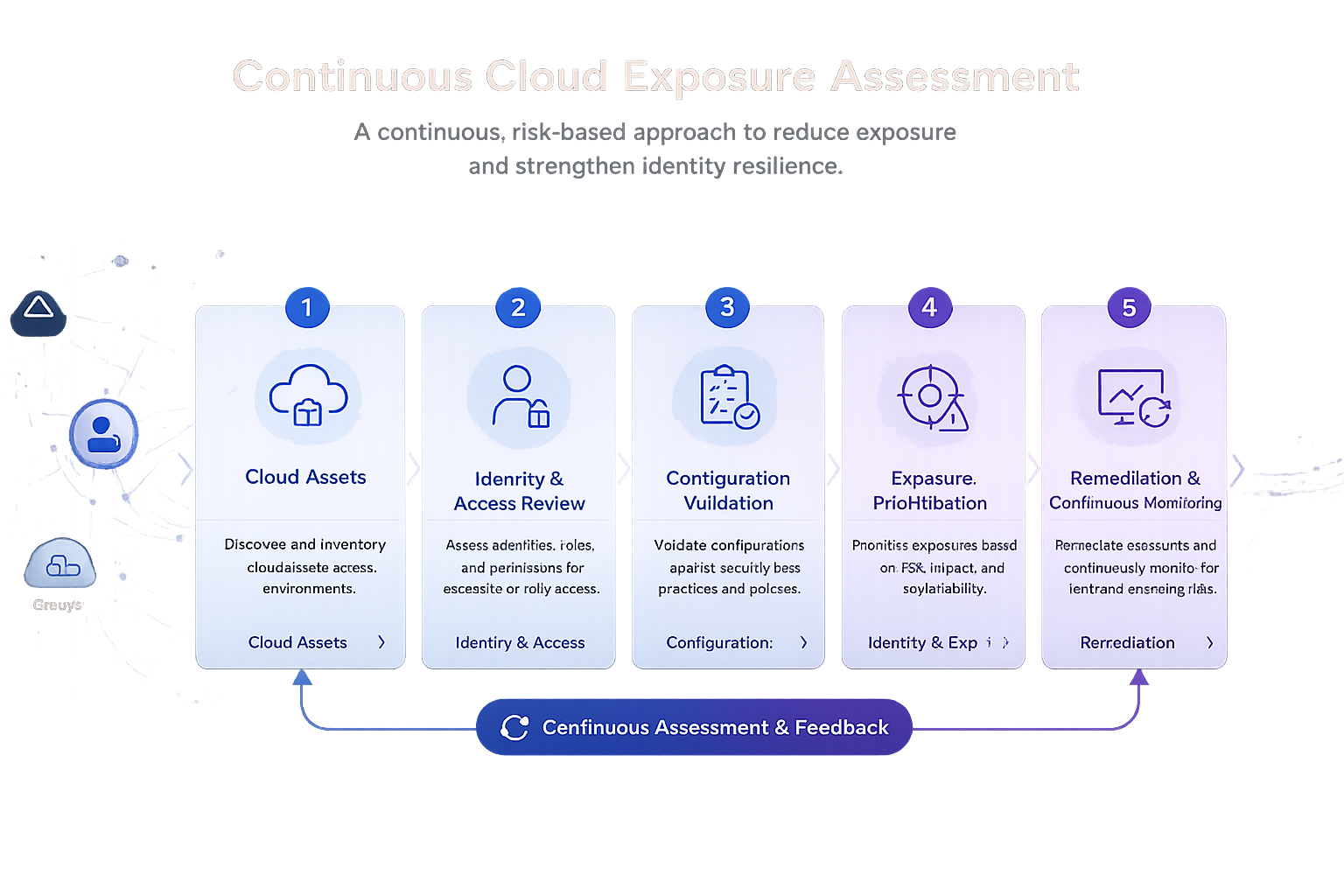
This is where continuous visibility becomes important.
As discussed in our article on cloud exposure management, modern attack surfaces change too quickly for periodic reviews alone.
Reducing Cloud Misconfiguration Risk
Reducing risk starts with understanding exposure.
Security teams should focus on:
- Continuous cloud visibility
- Permission reviews
- Configuration validation
- Asset discovery
- Exposure prioritisation
- Ongoing remediation
The goal is not to eliminate every finding.
The goal is to identify which issues create meaningful risk.
Closing the Gap Between Speed and Security
Cloud environments are designed for speed and flexibility.
Unfortunately, those same characteristics can create exposure when visibility falls behind.
As organisations continue to expand their cloud footprint, cloud misconfiguration risk will remain one of the most important challenges security teams must address.
The organisations that succeed will be those that continuously identify, prioritise, and remediate exposure before attackers find it first.