Prevention gets most of the attention in identity security.
Detection comes next.
Recovery is often the missing piece.
But when identity is compromised, recovery becomes the difference between a contained incident and a prolonged breach.
Identity recovery readiness is the real test of resilience.
The reality is many organisations have invested in prevention, but far fewer have true identity recovery readiness.
Identity Security Is Not Just About Prevention
Stopping attacks matters.
But what happens if an attacker:
- Takes over privileged accounts
- Changes permissions
- Creates persistence
- Deletes audit trails
- Corrupts identity configurations
At that point, prevention has already failed.
Recovery becomes the priority.
Without strong recovery capabilities, identity-driven breach risk remains high even after detection.
Why Identity Recovery Readiness Often Fails
Many identity programs focus heavily on visibility and alerts.
But recovery requires a completely different level of preparedness.
Common gaps include:
- No tested identity recovery plan
- Unclear recovery ownership
- Slow restoration processes
- Lack of clean rollback points
- No understanding of what “good state” looks like
This is where identity recovery readiness breaks down.
5 Reasons Identity Security Programs Struggle with Recovery
1. Recovery Is Treated as an IT Backup Problem
Traditional backups are not enough.
Identity recovery is different.
You need to restore:
- Accounts
- Group structures
- Privileges
- Policies
- Trust relationships
A simple backup does not guarantee secure recovery.
2. Privileged Access Is Already Compromised
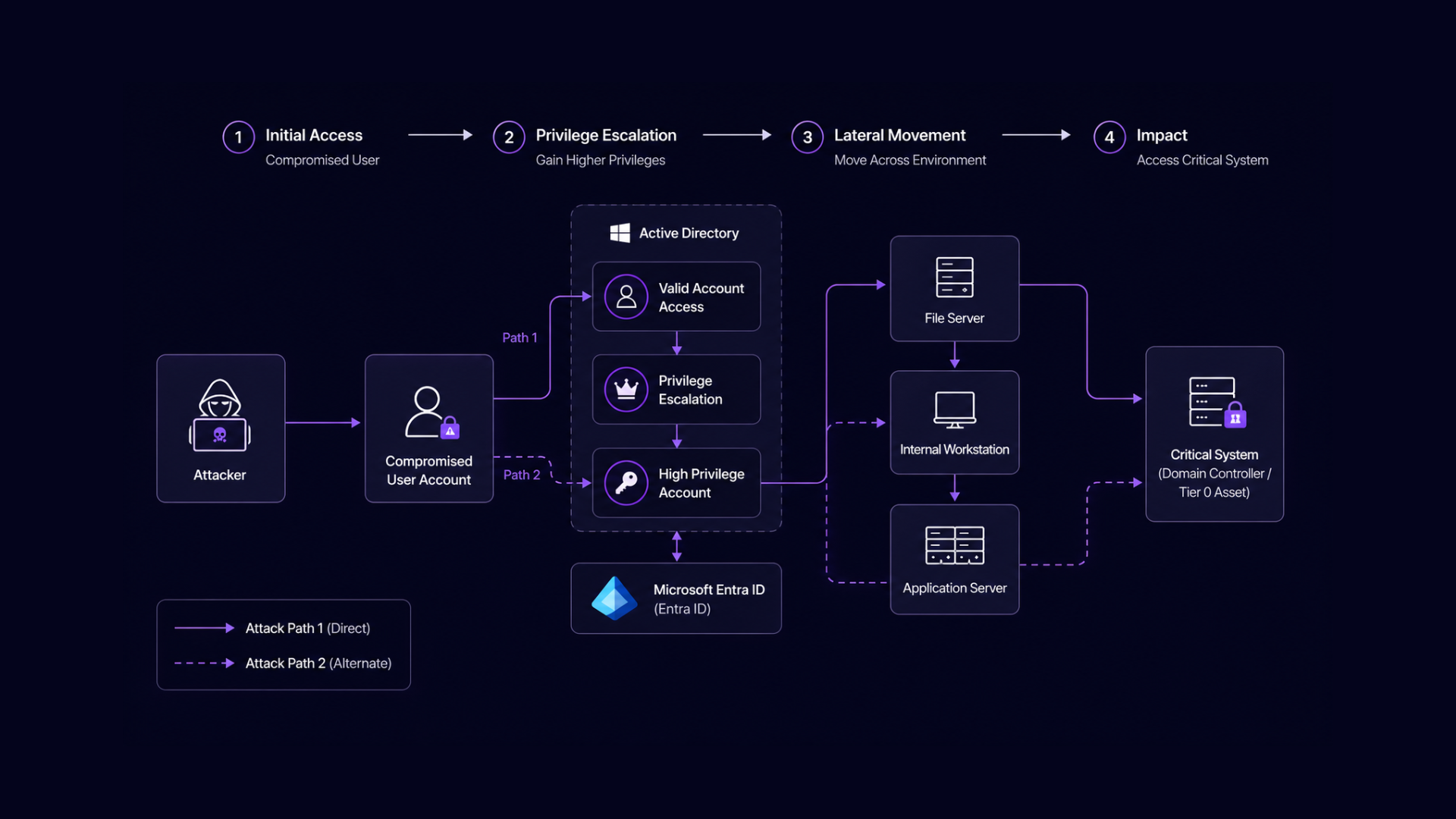
If attackers control admin access, recovery gets harder fast.
This often starts with overlooked Active Directory security risks that allow privilege escalation long before anyone notices.
By the time teams respond, the attacker may already control core identity infrastructure.
3. Hybrid Identity Adds Complexity
Modern environments span on-prem and cloud.
This creates multiple dependencies between:
- Active Directory
- Entra ID
- Sync configurations
- Conditional access
- Authentication policies
Even small Entra ID security gaps can create major recovery challenges when environments are interconnected.
4. Recovery Has Never Been Tested
Plans on paper are not the same as operational readiness.
Key questions:
- How long would recovery take?
- Who owns the process?
- What systems depend on identity restoration?
- What happens if privileged access is unavailable?
Many teams do not know until an incident happens.
5. Recovery Prioritisation Is Unclear
Not everything needs restoration first.
Without understanding identity dependencies, teams waste time restoring low-priority systems while critical access remains impacted.
Identity Recovery Readiness Is a Core Security Capability
Strong identity programs should answer:
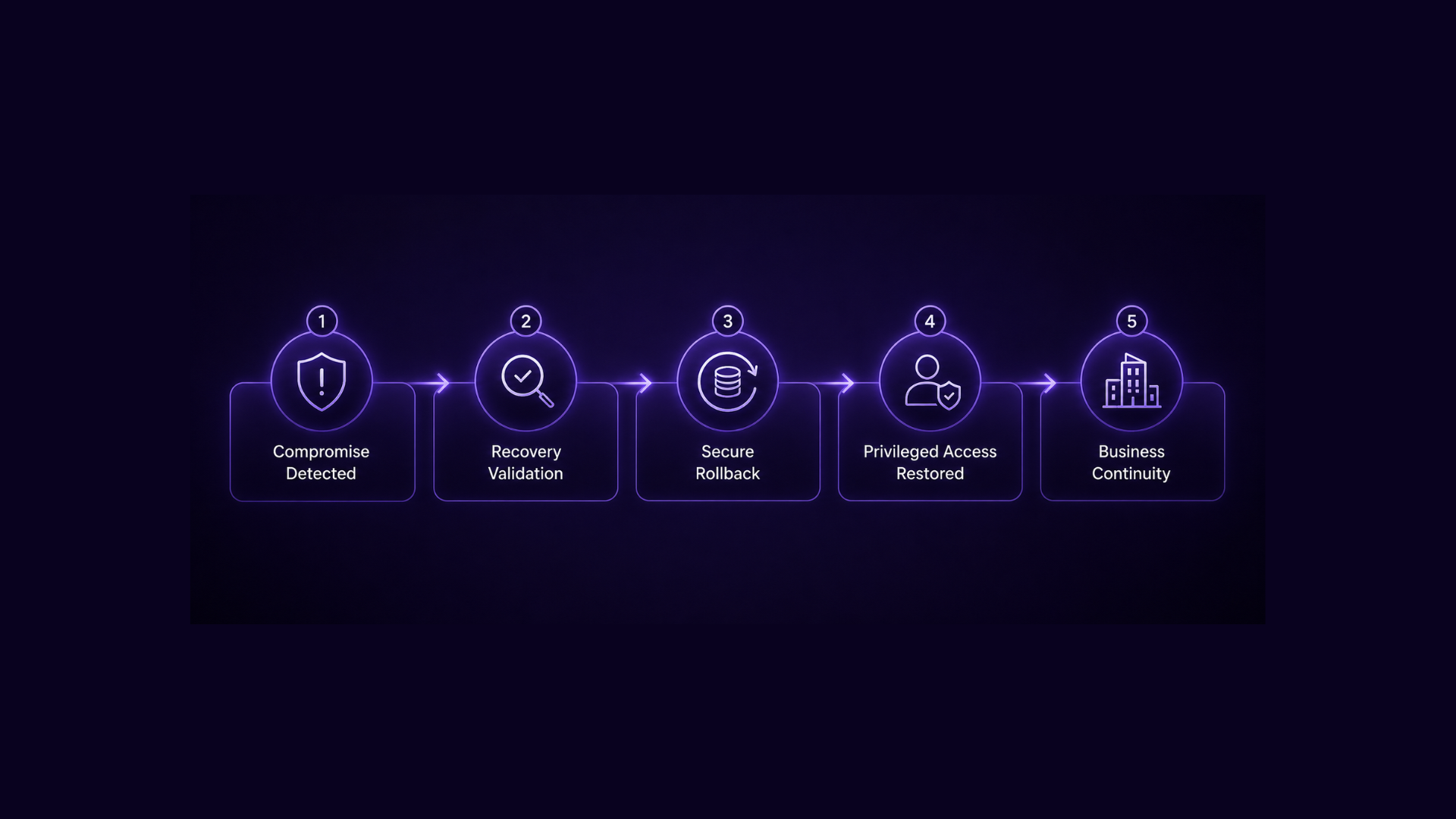
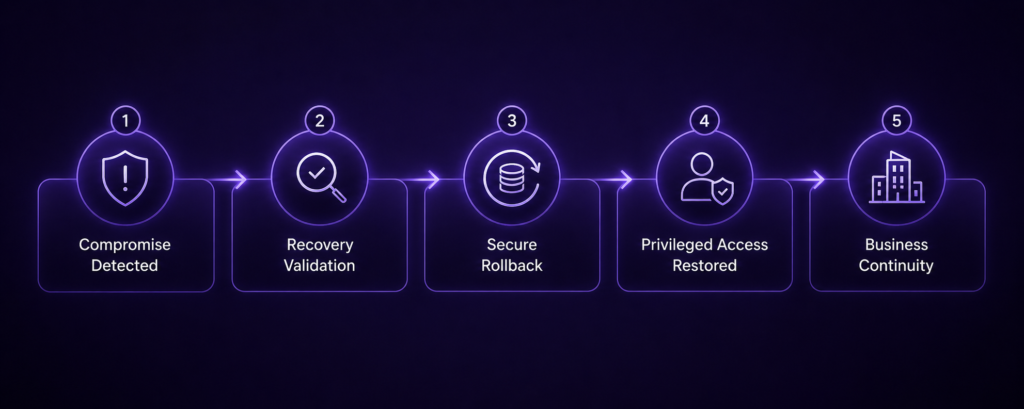
- Can we recover trusted identity infrastructure quickly?
- Can we validate integrity after restoration?
- Can we prevent attackers from re-entering?
- Can we restore privileged access safely?
That is true identity recovery readiness.
How to Measure Your Readiness
Recovery should be part of proactive risk reduction, not an afterthought.
A breach likelihood assessment helps identify identity weaknesses before they become recovery problems.
Because if recovery fails, the impact of compromise gets much worse.