Cloud resilience gets treated as a synonym for cloud security, but the two aren’t quite the same thing. Security asks whether your cloud environment is configured correctly today. Resilience asks a harder question: is your organisation set up to keep understanding and reducing cloud risk as the environment keeps changing tomorrow, next month, and next year.
That distinction matters because cloud environments don’t hold still long enough for a one-time security review to stay accurate.

Why Cloud Environments Outgrow Point-in-Time Reviews
New workloads deploy weekly. Permissions expand and rarely get revoked. Storage gets provisioned for a one-off project and stays exposed long after. Cloud exposure management exists as its own discipline precisely because this kind of change happens faster than most security review cycles can track — an annual or quarterly assessment is already out of date by the time it’s finished.
Resilience means building a program that assumes this pace of change rather than getting surprised by it.
Where Cloud Risk Actually Comes From
Three places account for most of the exposure security teams find once they look closely.
Misconfiguration
Cloud misconfiguration risk is rarely the result of a single bad decision. It’s usually what happens when development speed and security review move at different speeds — a storage bucket left open, a permission granted broadly “for now” and never narrowed, an integration added without a second look.
Identity
Cloud breaches don’t usually start with infrastructure. Identity in cloud security has become the more common starting point, because identities connect users, workloads, applications, and the resources they can reach — and a single overprivileged identity can do more damage than a dozen minor misconfigurations combined.
Unmanaged Growth
Cloud exposure management is difficult precisely because the attack surface doesn’t grow in a straight line. New accounts, new regions, new third-party connections — each one is a small decision made quickly, and each one adds to an attack surface that few teams are tracking in aggregate.
Turning Visibility Into Prioritisation
Most organisations aren’t short on data about their cloud environment — dashboards, scanners, and cloud-native tools all generate findings, often thousands of them. The harder problem is turning that volume into a short list of what actually matters, and that’s where a lot of otherwise well-resourced security teams get stuck: plenty of visibility, very little prioritisation.
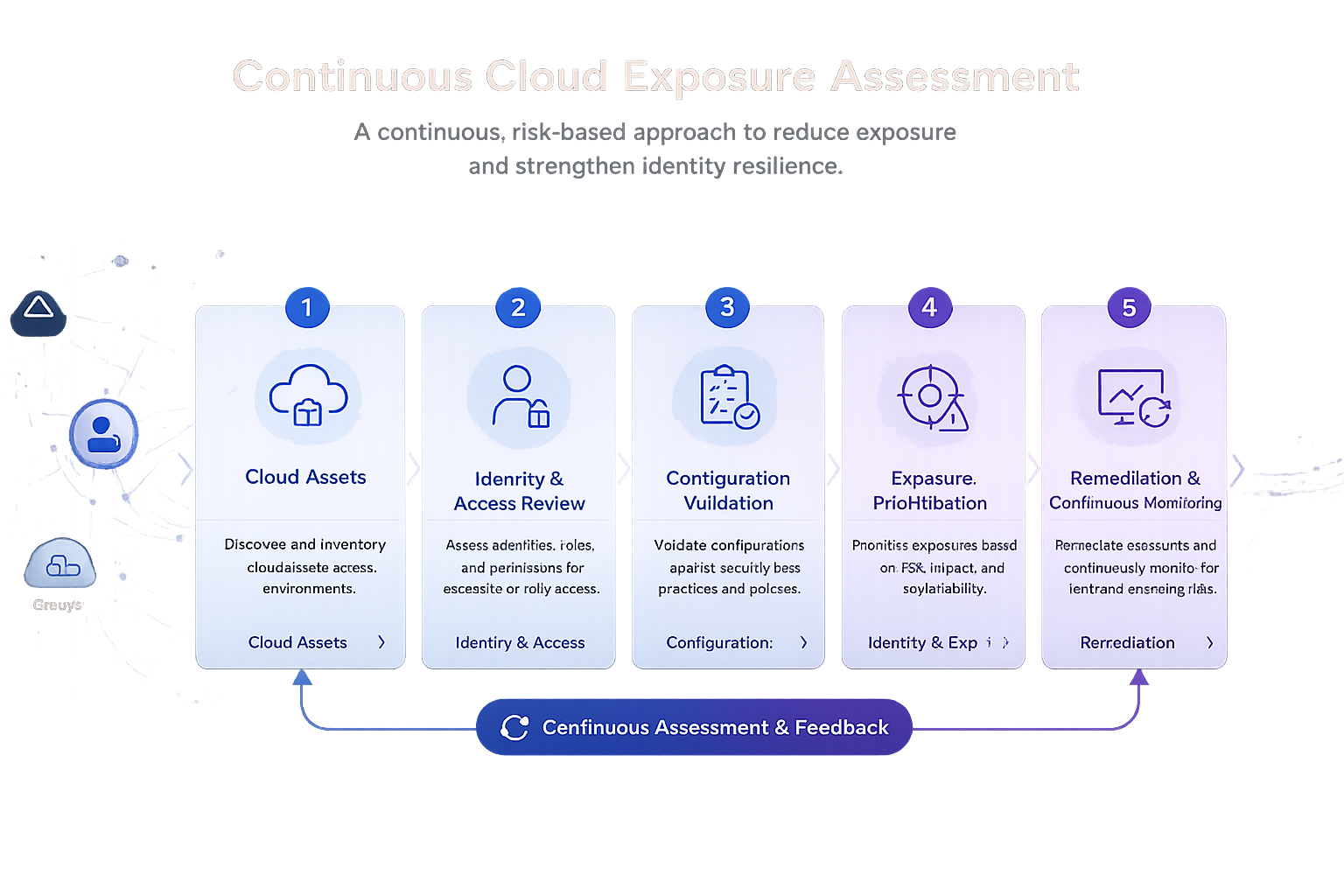
A cloud exposure assessment addresses that gap directly: identifying which assets are genuinely exposed, which identities carry excessive access, and which misconfigurations create real, exploitable risk rather than cosmetic findings. The output isn’t a longer report — it’s a shorter, prioritised one.
Why Cadence Matters as Much as the Assessment Itself
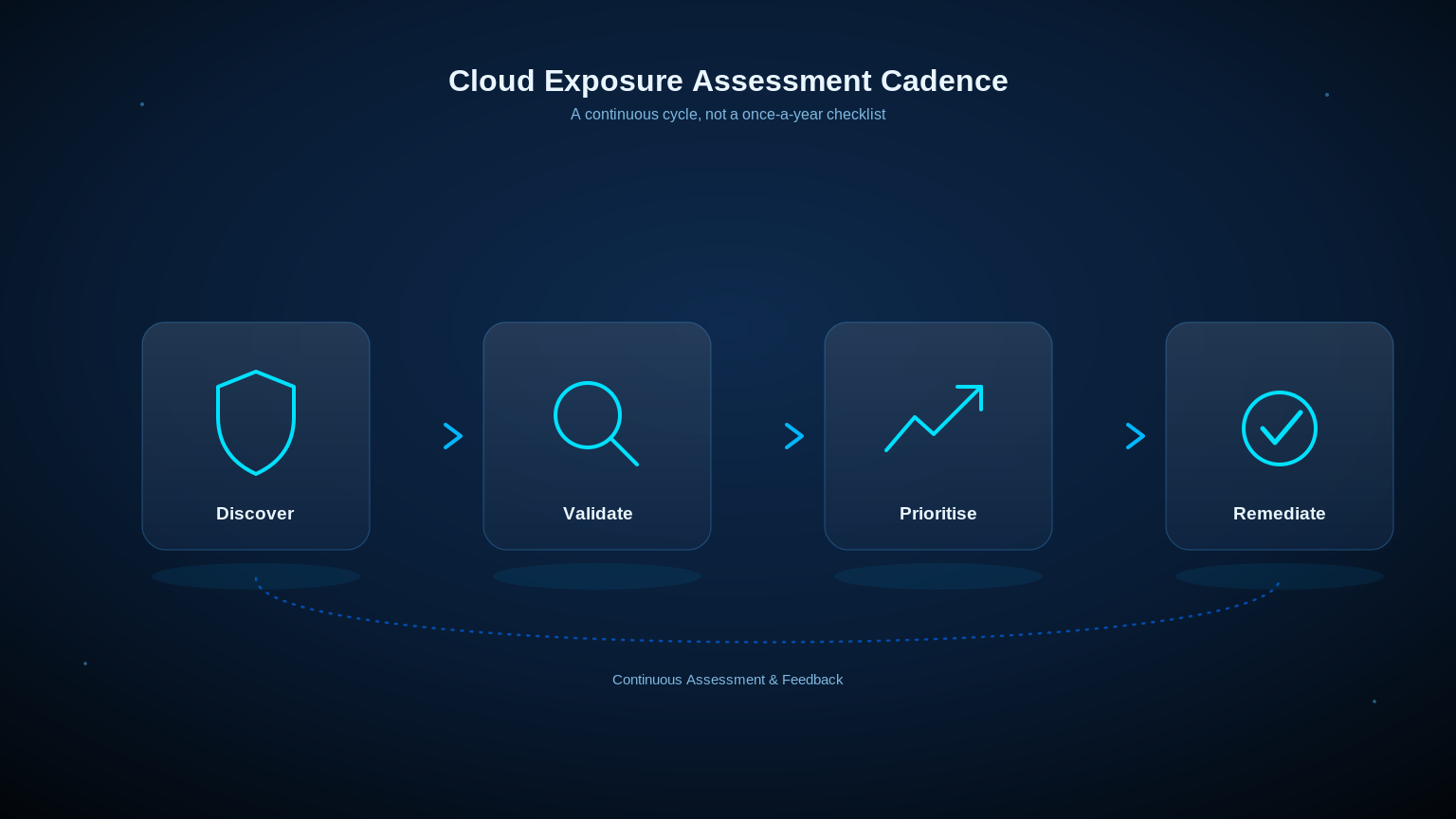
Even a good assessment loses value if it only happens once a year. Cloud resilience depends on matching assessment frequency to how fast the environment actually changes — deployment velocity, identity and access churn, and prior findings are all better signals than a fixed date on a compliance calendar. Getting that cadence right is what separates a point-in-time report from a genuine trend line on cloud risk.
What a Resilient Cloud Program Looks Like
Put together, the pattern looks less like a single project and more like an operating model:
- Treats misconfiguration and identity as connected risks, not separate workstreams
- Prioritises exploitable exposure over raw finding counts
- Assesses on a cadence that matches the pace of infrastructure change, not a fixed calendar date
- Tracks whether exposure is trending up or down, not just what it looks like today
None of this is a one-time fix. Like identity resilience, cloud resilience is an ongoing practice rather than a milestone to reach and move on from.
Building Cloud Resilience as an Ongoing Practice
Every piece above works on its own, but the organisations getting the most value from it treat cloud exposure management, misconfiguration reduction, identity risk, and assessment cadence as one connected program rather than four separate initiatives.
That’s the model behind Managed Cloud Resilience: a continuously managed approach to cloud risk, rather than a periodic project that goes stale the moment it’s finished.
If you’re working out where your own cloud program has the biggest gaps, a cloud exposure assessment is a reasonable place to start.